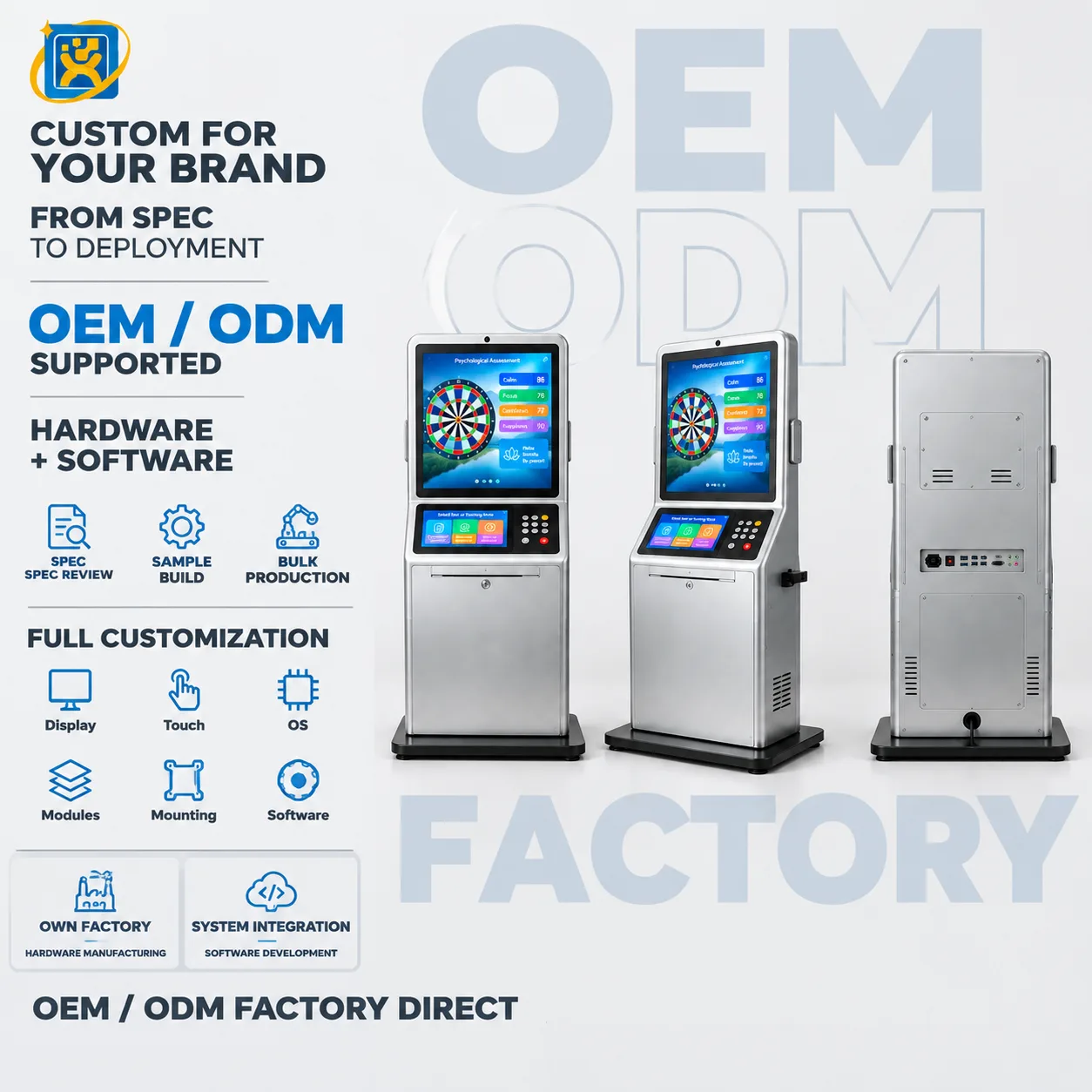
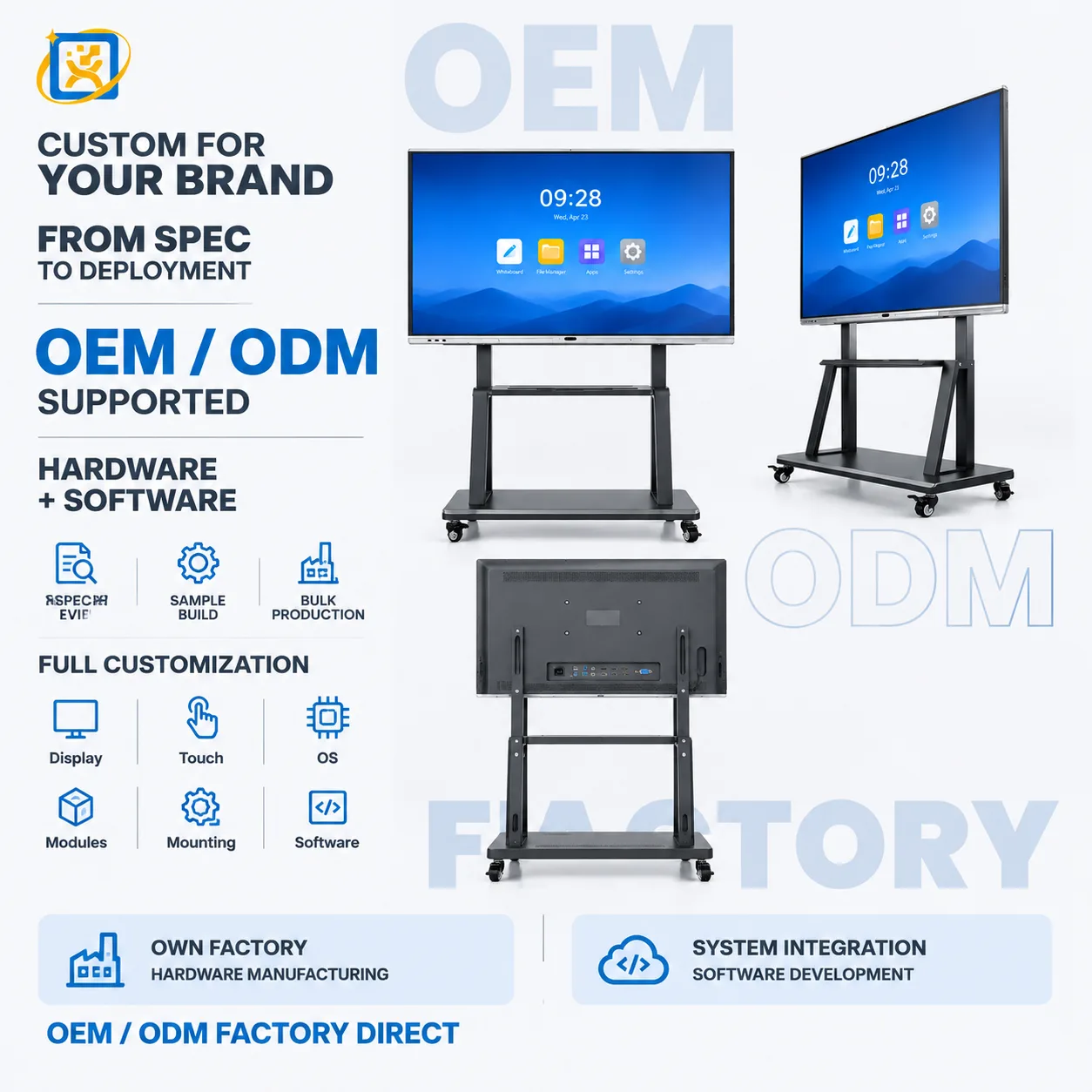
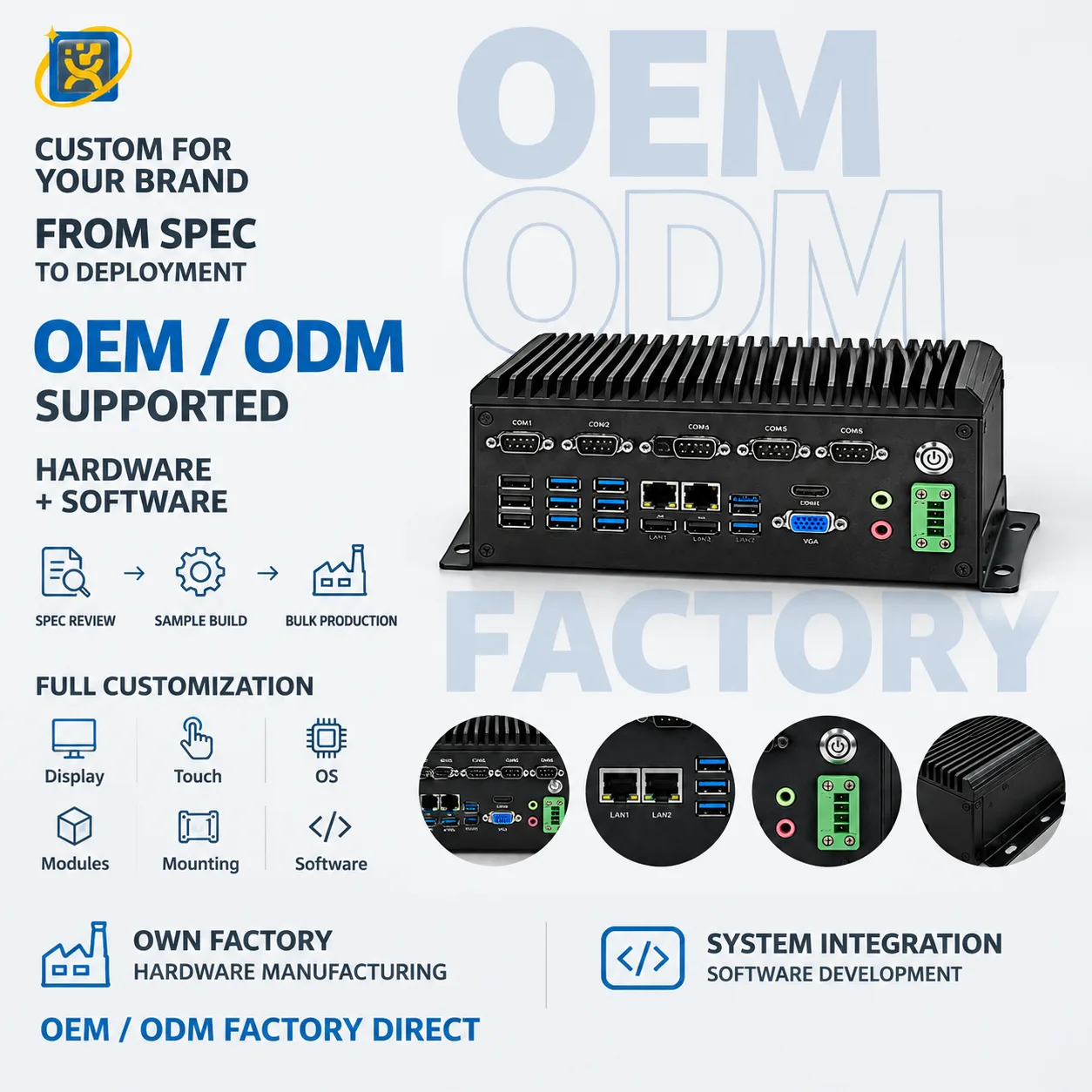
The software vendor’s problem is hardware variance
A medical software product behaves consistently in a test lab and inconsistently in the field, and the usual cause is hardware variance. Different PCs, different drivers, different peripheral firmware, different power behaviour. Every variation becomes a support case that the software vendor cannot reproduce.
The way out is to fix the hardware platform once and vary only what the project genuinely requires. That is the arrangement we build with medical software companies and healthcare IT integrators.
How the arrangement usually works
1. Platform selection. Together we choose the computing platform, the screen size range and the peripheral set that covers the majority of your deployments.
2. Factory configuration. The operating system image, the driver set, the autostart behaviour, the peripheral initialisation sequence and the network defaults are configured at the factory. Units arrive ready to run your application.
3. Project variation. Individual sites then vary only the enclosure, the screen size, the branding and the specific peripherals — without touching the software environment. Your application does not need to know.
4. Documentation per build. Each build gets a configuration record: platform, storage, interfaces, peripheral models and firmware. That record is what goes into a site acceptance file or a tender response.
Where the integration work actually happens
In our experience the time goes into four places, and it is worth planning for them:
Peripheral drivers and SDKs. Card readers, scanners, printers and biometric modules each have their own driver or SDK. Getting these pre-installed and pre-configured at the factory is the single biggest reduction in commissioning time.
Serial and GPIO devices. Equipment integration frequently depends on serial communication or digital I/O. Confirming the port count, the connector type and the protocol before production avoids an adapter on site.
Identity and document services. Where a national identity service or a document-scanning service is involved, the provider’s requirements determine the reader module. Settling this early prevents a housing change later.
Power behaviour. Kiosks in public spaces lose power. The platform is configured for power-on auto-restart and a defined boot state so that a unit returns to the right screen without a site visit.
Why lifecycle matters to a software vendor
Your product may have a ten-year support horizon. If the hardware platform inside it is obsolete in year three, you face a redesign or an unsupported fleet. We select mainboard platforms on long-term availability, and we hold configuration records so that a replacement unit matches the original build.
What we need from you
- The application, the operating system it requires and the peripherals it drives.
- The screen size range and enclosure requirements across your deployments.
- Any identity, payment or document-scanning services involved.
- Expected annual volume and the geographic spread of sites.
- Certification requirements per market.
Send the above and we will come back with a platform proposal, a factory configuration plan and lead times.